
COMPUTERS

INTRODUCTION
Computers are well known in our daily lives. Today, almost everyone have and owns a computer. It is a part of our lives where we use it for multi tasking. Computers bring us entertainments, knowledge and also we use it for our assignments and paperworks. Computers have evolve rapidly due to the high demand and increasing number of usage from us, humans. Because of this many brands and companies make out computers so that the main objectives of this technology is created will be achieved. It is to make humans life easier. But what if we lost this technology and how we will survive the world if computers are vanished ? Would our world will be dark and everything seems out of our reach ? Are we that dependent on this technology ?

Firstly, let the numbers talk about this. Based on the table above, a research made by Reimer (2012) shows that we can clearly see that by years the sales of computers is indeed increasing. Every year, new computers were bought by us so that it somewhat help us on our daily lives. Thus, the use of internet as the main reason of having computers made the sales of it keep increasing throughout the years and there are no showing that this trends would stop even though facing competitors such as smartphones and tablets in this recent years.
So what exactly are we doing with computers ? Well, Kunz and Tsoukalas (n.d) describes that most of the time the students in Ontario, Canada use their time on computers to check on their assignments and writings. Other than that they use it for playing games as well as log into the World Wide Web. This is essential as computers help the students to learn from computers to help them with their assignment, research for their study on the internet and also help to develop their brain by playing games on the computer.

THE DEBATE
So, the information above clearly shows that we use computers often and why we use it ? Simple. It is to get our work done easily, reading through the news and also communicate with others from a single click. But does this means that we are dependent on it ? Givens (2008) gives his prediction on our dependency towards this technology. He clearly said that America is going to become an E-society where everything is electronics. We shops online, read online and even doing everything online. This will have a bad effect on us human where computers will take over our brain and we would become less creative and incompetent to do many task at once. This dependency would also cause us to lose our job due to the rise of the computers taking over our work in the future.
However, computers help us to communicate fairly easier. Frei (2008) somehow approve that the dependence on computers bring benefit to the society. One of them is E-mail. The start of this technology on computers have help people to communicate effortlessly because of it fast, reliable and incredibly free rather than standard mails. Another one is that instant messaging trends have help us to communicate with family and friends in these past years. Instant messaging is more efficient and quicker rather than standard phone call because the method is easy. We just write and send. This will definitely helped the society by closing the bonds together in this growing world.
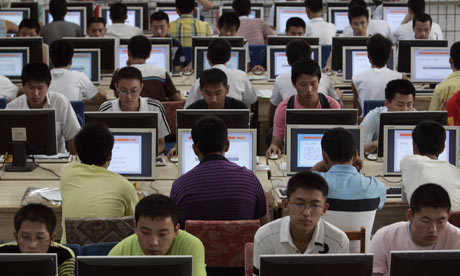
Meanwhile, Morrison (2009) argues that communication will bring more benefits on our dependency on computers. She describes that in her article that we could be get along too much with computers. We tends to be comfort in front of the computer and avoids the real world. This will have great effect on society as new word for these people will be created. The anti-social. They are classified as lazy people and full with obsession with computers. Even though they communicate with people online, their exact behaviour will be unknown as they interacts lesser than people outside. This will have greater effects on the young ones because this will affect their growth and social life in the real world rather than in games that they are playing.
On the other hand, Castano (n.d) said in his article that the dependence on computers would really give us the superior task on most of the things we done in our daily lives. As for works, it gives us the access to information where paperworks and documents can be done just from our home. People from work could also connect with us effortlessly and sharing the information together might give us peace of mind if we having less ability to travel. He also added that computers benefit the education system. Online course and seminars can now be entered just from the internet. This would save a lot of hassle and time while we can obtain our degree in no time.
CONCLUSION
The dependence on computers have its advantages and disadvantages. It depends on us how we use the technology and make use of it to simplify our lives or to make our life more miserable. However, the dependence on this technology shouldn't be taken lightly as the future society of our generation will be based on our evaluation on this issue today. It is true that technology has and continue to shape the face of our society nowadays. But the rise of computers and information technology shouldn't affect our communication, works and personal lives. We human should balance our dependency on computer technology and consider the value of more hands on interaction with the world.

REFERENCE LIST
Castano, C (n.d) Computers' Effect on Society. [eHow.com]. Retrieved from http://www.ehow.com/facts_6956319_computers_-effect-society.html
Frei, J. (2008, April 7) How Computers Benefit Society. [Articlesbase]. Retrieved from http://www.articlesbase.com/culture-articles/how-computers-benefit-society-380839.html
Givens, J. (2008, April 7) The increasing human dependence on Computers. [Yahoo Voices]. Retrieved from http://voices.yahoo.com/the-increasing-human-dependence-computers-1360477.html
Kunz, J and Tsoukalas, S. (n.d) Computers and Adult Literacy: Voices of computer literacy students in Ontario. Canadian Council on Social Development. Retrieved from http://www.ccsd.ca/pubs/literacy/literacy.htm
Morrison, M. (2009, July 18) Are we too dependent on Computers. [Bukisa]. Retrieved from http://www.bukisa.com/articles/124318_are-we-too-dependent-on-computers
Reimer, J. (2012, August 15) From Altair to iPad: 35 years of personal computer market share. [Arstechnica]. Retrieved from http://arstechnica.com/business/2012/08/from-altair-to-ipad-35-years-of-personal-computer-market-share/4/

No comments:
Post a Comment