14 November 2012

CURRENT DEPENDENCY OF SOCIETY ON TECHNOLOGY


COMPUTERS


INTRODUCTION
Computers are well known in our daily lives. Today, almost everyone have and owns a computer. It is a part of our lives where we use it for multi tasking. Computers bring us entertainments, knowledge and also we use it for our assignments and paperworks. Computers have evolve rapidly due to the high demand and increasing number of usage from us, humans. Because of this many brands and companies make out computers so that the main objectives of this technology is created will be achieved. It is to make humans life easier. But what if we lost this technology and how we will survive the world if computers are vanished ? Would our world will be dark and everything seems out of our reach ? Are we that dependent on this technology ?


Firstly, let the numbers talk about this. Based on the table above, a research made by Reimer (2012) shows that we can clearly see that by years the sales of computers is indeed increasing. Every year, new computers were bought by us so that it somewhat help us on our daily lives. Thus, the use of internet as the main reason of having computers made the sales of it keep increasing throughout the years and there are no showing that this trends would stop even though facing competitors such as smartphones and tablets in this recent years.

So what exactly are we doing with computers ? Well, Kunz and Tsoukalas (n.d) describes that most of the time the students in Ontario, Canada use their time on computers to check on their assignments and writings. Other than that they use it for playing games as well as log into the World Wide Web. This is essential as computers help the students to learn from computers to help them with their assignment, research for their study on the internet and also help to develop their brain by playing games on the computer.


THE DEBATE
So, the information above clearly shows that we use computers often and why we use it ? Simple. It is to get our work done easily, reading through the news and also communicate with others from a single click. But does this means that we are dependent on it ? Givens (2008) gives his prediction on our dependency towards this technology. He clearly said that America is going to become an E-society where everything is electronics. We shops online, read online and even doing everything online. This will have a bad effect on us human where computers will take over our brain and we would become less creative and incompetent to do many task at once. This dependency would also cause us to lose our job due to the rise of the computers taking over our work in the future.

However, computers help us to communicate fairly easier. Frei (2008) somehow approve that the dependence on computers bring benefit to the society. One of them is E-mail. The start of this technology on computers have help people to communicate effortlessly because of it fast, reliable and incredibly free rather than standard mails. Another one is that instant messaging trends have help us to communicate with family and friends in these past years. Instant messaging is more efficient and quicker rather than standard phone call because the method is easy. We just write and send. This will definitely helped the society by closing the bonds together in this growing world.
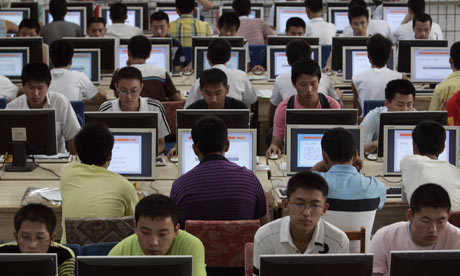


Meanwhile, Morrison (2009) argues that communication will bring more benefits on our dependency on computers. She describes that in her article that we could be get along too much with computers. We tends to be comfort in front of the computer and avoids the real world. This will have great effect on society as new word for these people will be created. The anti-social. They are classified as lazy people and full with obsession with computers. Even though they communicate with people online, their exact behaviour will be unknown as they interacts lesser than people outside. This will have greater effects on the young ones because this will affect their growth and social life in the real world rather than in games that they are playing.

On the other hand, Castano (n.d) said in his article that the dependence on computers would really give us the superior task on most of the things we done in our daily lives. As for works, it gives us the access to information where paperworks and documents can be done just from our home. People from work could also connect with us effortlessly and sharing the information together might give us peace of mind if we having less ability to travel. He also added that computers benefit the education system. Online course and seminars can now be entered just from the internet. This would save a lot of hassle and time while we can obtain our degree in no time.

CONCLUSION
The dependence on computers have its advantages and disadvantages. It depends on us how we use the technology and make use of it to simplify our lives or to make our life more miserable. However, the dependence on this technology shouldn't be taken lightly as the future society of our generation will be based on our evaluation on this issue today. It is true that technology has and continue to shape the face of our society nowadays. But the rise of computers and information technology shouldn't affect our communication, works and personal lives. We human should balance our dependency on computer technology and consider the value of more hands on interaction with the world.


REFERENCE LIST

Castano, C (n.d) Computers' Effect on Society. [eHow.com]. Retrieved from http://www.ehow.com/facts_6956319_computers_-effect-society.html

Frei, J. (2008, April 7) How Computers Benefit Society. [Articlesbase]. Retrieved from http://www.articlesbase.com/culture-articles/how-computers-benefit-society-380839.html

Givens, J. (2008, April 7) The increasing human dependence on Computers. [Yahoo Voices]. Retrieved from http://voices.yahoo.com/the-increasing-human-dependence-computers-1360477.html

Kunz, J and Tsoukalas, S. (n.d) Computers and Adult Literacy: Voices of computer literacy students in Ontario. Canadian Council on Social Development. Retrieved from http://www.ccsd.ca/pubs/literacy/literacy.htm

Morrison, M. (2009, July 18) Are we too dependent on Computers. [Bukisa]. Retrieved from http://www.bukisa.com/articles/124318_are-we-too-dependent-on-computers

Reimer, J. (2012, August 15) From Altair to iPad: 35 years of personal computer market share. [Arstechnica]. Retrieved from http://arstechnica.com/business/2012/08/from-altair-to-ipad-35-years-of-personal-computer-market-share/4/


08 November 2012

EMERGING TECHNOLOGY

AUTONOMOUS CAR


INTRODUCTION

Basically, an autonomous car is what we simply understand as a driver less cars or robot cars. This type of cars are equipped with a lot of sensors and mainly operates itself by using various technologies such as radars, Global Positioning System (GPS) and also computer vision. Nowadays, many companies are taking this approach to test out their robot cars on the road. This is like a research for their future development and also the use of possible new technologies on their upcoming vehicles.

Today, one of the popular experiments on this technology belongs to Google. Google's choice is to use Toyota Prius equipped with radar and GPS to aid them in order to understands real world driving environment how to navigate itself. All of the data will be securely stored in Google's storage server and give them information on road conditions, traffics and also obstacles on the road. (Shirley (2011), para. 3).


STRENGTHS

The main concern about this autonomous car is most probably is the safety of it. With no aid by the driver this car system may be faulty and cause crashing. However, a study on autonomous car shows that the adaptive technology on it may seems to reduce crashing. Vijayenthiran (2012) describes that the study made by Insurance Institute for Highway Safety (IIHS) found that the technology in the early autonomous cars are already prevent crashing. This due to the technology on the vehicle that have responsive braking system and also forward collision warning that keeps the vehicle on distance and prevent low speed front to rear collision.

In other source, Santo (2012) stated in his article that the California state have already given the green light to Google to further up their research on autonomous car. This makes that the state allows the use of this robot car on the road in the Californian roads. The Senator, Alex Padilla strongly urges that the use of this autonomous cars could reduce the high numbers of accidents by improving the safety of the roads and highways. He also adds that this is because human operated vehicles tends to have a huge error that cause accidents in the results.

The statement later then supported by the achievement of Google's autonomous car. The Google's car now targeting to be on self driving mode up to 1,000,000 miles. This major goal is being considered after their autonomous car done 140,000 miles of travelling without any incidents or accidents happen although travelling of just 1,000 miles without any driver assist. This proves that autonomous car is somewhat intelligent, safe and could be the shape of our future in the automotive world. (Read, 2011)


FUTURE IMPACTS

Autonomous car somewhat brings more advantages rather than disadvantages onto society. If we look on the bright side autonomous car would really be considered for the future mainly because it will lessen human deaths out of accidents on the roads. The number would be decreasing from year to year due to artificial intelligence that their car have to stop them for colliding each other. Neil (2012) said that the autopilot function on the autonomous car could help you in your driving. Computers won't get tired, sleepy and distracted therefore keeping you safe on the road. The car's response would be better than average human because of its effortless observation on the road.

Besides that, this technology could bring better mobility in the future. Before, cars are only meant for those who passed their driving license. But now, this personal mode of transportation could be widely opened to the society. Young and old people without driving license no longer have to wait for supervision to take them to the mall or hospitals. The disables will truly appreciates this technology because of it they now have the power to travel and be wherever they want easily with the help of this robot cars. (McElroy, 2012)

Furthermore, these technology could revolutionise the transportation industry and also help the cities to grow. Alpert (2010) with this technology, taxis and buses would be less dependant on human and might lower down the labour costs. Taxis and buses might drive on their own and transports passengers efficiently. The Economist (2012) would also agree on the use of autonomous car due to its efficient factor could shape the city. The next city would be denser due to smaller roads requires by the cars and space would plenty to be exploited for growth. The space would be ideal for bike lanes or parks to make the city more sustainable.


REFERENCE LIST

Alpert, D. (2010, October 15) What will autonomous cars means for cities. Greater Greater Washington. Retrieved from http://greatergreaterwashington.org/post/7604/what-will-autonomous-cars-mean-for-cities/

The Economist (2012, September 1) Look, no hands. The Economist. Retrieved from http://www.economist.com/node/21560989

McElroy, John. (2012, March 27) How autonomous car about to change our future. Autoblog. Retrieved from http://www.autoblog.com/2012/03/27/how-autonomous-cars-are-about-to-change-our-future/

Neil, D. (2012, September 24) Who's behind the wheel? Nobody. The Wall Street Journal. Retrieved from http://online.wsj.com/article/SB10000872396390443524904577651552635911824.html

Read, R. (2011, October 21) Google's Next Goal: 1,000,000 miles in a self driving car. Motor Authority. Retrieved from http://www.motorauthority.com/news/1067619_googles-next-goal-1000000-miles-in-a-self-driving-car

Santo, M. (2012, September 1) Google's autonomous cars clear California hurdle. [Examiner.com]. Retrieved from http://www.examiner.com/article/google-s-autonomous-cars-clear-california-hurdle

Shirley, N. (2011, October 28) Google's autonomous car target: 1M accident-free miles. Left Lane News. Retrieved from http://www.leftlanenews.com/googles-autonomous-car-target-1m-accident-free-miles.html

Vijayenthiran, V. (2012, July 16) Study finds early autonomous car tech reducing crashes. Fox News. Retrieved from http://www.foxnews.com/leisure/2012/07/16/study-finds-early-autonomous-car-tech-already-reducing-crashes/


02 November 2012

CULTURES & TECHNOLOGY


Māori


INTRODUCTION
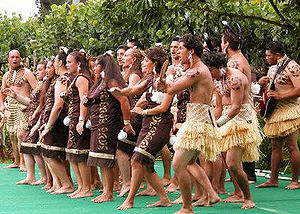
Maori are the native people in New Zealand. They are a tribe that rich with culture and powerful social organization. With the arrivals of European in the 17th century, this indigenous society gradually adopt the life of the Westerners since the Treaty of Waitangi was formed in 1840 as a part of new British colony. Since then, the Maori people cross tension with the Europeans or Pakeha ( Maori language ) with the wars, lands claim and other major conflicts. This was the factor of the decline of this society in New Zealand in that period of time.

But after that in the 20th century, the Maori people began to rise and therefore increase their population in the New Zealand society. They started to learn the culture of other races and also accepts technologies that were brought to New Zealand in order to help them expand and educate themselves in this growing world. This much needed effort will help them to compete with the others in many aspects such as economy, cultures and education whether it is inside or outside New Zealand (Wikipedia, n.d)


TECHNOLOGY IMPACTS
Historically, Maori people are like the other culture where most of the society uses stone, wood and the forests for their daily needs. Maori people are mostly horticulture and also rely their foods on the seas where it is easy for them as their main mode of transport is canoe. But with the arrival of Europeans, their traditional technology seems to be fading with the Europeans introduce the technologies that a lot more advanced such as new mode of transport, literacy and importantly musket. This seems to make they rage over the Europeans and typically wars become the answer for them. The decline for the Maori have been significantly happen in the wars where they lost the lands to the Europeans and they can't fight with the firepower that Europeans had. This however, turns as most of the Maori trade for firepower and musket to give them sense of security and also to defend their land from other tribes. (Tapsell, 2009)

In the sense of culture, technology have also impacted this native society of New Zealand. Apparently, until today most of the Maori culture is preserved to keep their beliefs and customs. One of the Maori culture pride, that is Marae is still being build throughout the country. The design and traditional value were still kept until today but the materials and the construction are based from today technologies to help the Marae strong and a place where everyone can benefits from it. (Taylor, n.d. para. 7). Besides that, the schooling system in New Zealand follows the British way. But to help the culture remain strong, the Maori-language education were introduced to help educate young Maori to never forget their roots. Furthermore, most of Maori art nowadays adapt western techniques to provide a contemporary and creative ways to shows the Maori culture to the world. (Royal, 2009).

Socially, the Maori have adapt well of the technology to use it to interact with others in the society. The use of technology have created the urbanisation effect to them. Most Maori leaves their tribal and rural home and stays in the cities thus, creating an urban Maori communities. This community get better education in the westerners institutions and jobs. Now in the 21st century with Maori being educated, the society of New Zealand now approves the Maori as an influential force. More and more Maori people being successful in today news and more companies and media being associated and owned by Maori themselves. (Royal, 2009)


COMPARISONS
With Maori being influential in New Zealand, Orang Asli in Malaysia were still left out in the context of lifestyles, technology acceptance and also society views. Orang Asli were classified as the aboriginals in Malaysia and the concern for them came after the development of Malaysia approach along their lands. Until today, Orang Asli still searching for their identities and lands in the fast developing Malaysia land.

One of the issue regarding Orang Asli is that education are one of the concern. A research by Suhakam, a human rights commision in Malaysia shows that nearly 7000 of Orang Asli children never attended school. The factors are that they exceptionally lives deep inside the jungle and transportation also become one of the issue. This somehow affects the Orang Asli society where education is needed to get the children to face up the world in the future. This surely hurts the reputation of them eventhough by being the indigenous people of Malaysia. (MySinchew, 2012).

Besides that, with the old traditional system that Orang Asli still practise up until today make them pay as they lost up most of their lands to developers to make way for logging, plantation and modern development. This is because there are no standard procedure for them from the government to claim their lands like normal citizen with land title or grant. This will cause the Orang Asli to decline much more further in the land of Malaysia. (Jayasooria, 2012)

Because of all this factors, the concern from public and non government organisation turns out to help the Orang Asli. This is mainly to protect their rights as the indigenous people of Malaysia and to help them develop their community in Malaysia while suppress the Malaysian government to take actions on it. One of the issues are education where it could help to lift the Orang Asli out from poverty and also providing more subtle land and houses to them. This effort is in conjunction to help them from becoming extinct in Malaysian book of history. (Shukry, 2012)


REFERENCE LIST

Jayasooria, (2012, May 29) Orang Asli struggle for land and identity. The Malay Mail. Retrieved from http://www.mmail.com.my/story/orang-asli-struggle-land-and-identity

MySinchew. (2012, September 3) 7,000 Orang Asli children have never attended school. MySinChew.com. Retrieved from http://www.mysinchew.com/node/77214

Shukry, A. (2012, November 7) Govt failed to protect Orang Asli rights. Retrieved from http://www.freemalaysiatoday.com/category/nation/2012/11/07/govt-failed-to-protect-orang-asli-rights/

Royal, C. (2009, March 3). 'Māori - Urbanisation and renaissance', Te Ara - the Encyclopedia of New Zealand. Retrieved from http://www.teara.govt.nz/en/maori/5

Tapsell, P. (2009, March 4). 'Te Arawa - European impact, Te Ara - the Encyclopedia of New Zealand. Retrieved from http://www.teara.govt.nz/en/te-arawa/4

Taylor, E. (n.d) 'Korero'. National Library of New Zealand. Retrieved from http://teaohou.natlib.govt.nz/journals/teaohou/issue/Mao02TeA/c14.html

Wikipedia, (n.d) Maori people. Retrieved from http://en.wikipedia.org/wiki/M%C4%81ori_people

09 October 2012

ETHICS

NUCLEAR ENERGY
Future Energy or Future Danger


Introduction

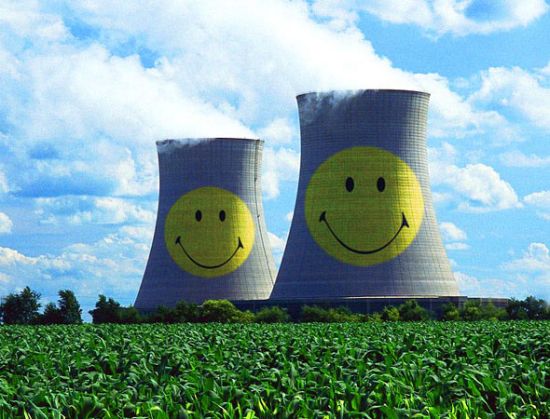
As we all know by now, the need for renewable energy source exceptionally high. This is basically due to the increasing number of world population as well as the needs of electricity to light up our nights. We can't rely heavily on fossil fuels as the reserve are depleting and how the generation of electricity by this method would cost the environment that inflict more problems. The most suitable solution right now for this problem are nuclear energy as they say that it is reliable, stable and yet cost-effective. This however, concern major population of the earth as nuclear would bring more negative impact due to its waste and radiation problems of like what happen in Chernobyl and also Fukushima, Japan recently.


The urge to find new energy source comes to this. As we can see on the diagram above, the anticipation of this renewable energy have to start now or else we wouldn't make it through the depletion of fossil fuels over time. "Clearly fossil fuel reserves are finite - it's only a matter of when they run out - not if.  Globally - every year we currently consume the equivalent of over 11 billion tonnes of oil in fossil fuels. Crude oil reserves are vanishing at the rate of 4 billion tonnes a year – if we carry on at this rate without any increase for our growing population or aspirations, our known oil deposits will be gone by 2052". (Ecotricity, (n.d), para. 4).


But there is still questions on this renewable energy these days. Most people would ask why choose nuclear energy ? Why not wind or solar energy as the primary source. Brook (2009) describes that the diagram above speaks itself. Based on the research done using the data by International Energy Agency in 2007 proves that other renewable energy such as wind, tidal, solar and geothermal doesn't have significant contribution towards the world energy consumptions. Even though those energy is combined up in the renewables category, but these energy needs to be sum up in order to provide new and clean energy to the world which is not enough alone to be the primary source when gas, oil and coal are finished. Meanwhile on the bright side, nuclear energy with 6.5% have already establish a notable presentation on its capability as a stable and reliable renewable energy. 


Ethical Consideration


Nowadays, there is right and wrong in whatever choices or decisions that we made and there must be reasons behind it. This is also applicable to nuclear energy. Most of the people would not accept the nuclear energy plan while others demand it. This somehow due to many reasons behind it. Firstly, people reject this nuclear energy because they afraid that results of a tragedy that happen at the nuclear plant in Fukushima, Japan could happen again. Sample (2011) describes that the plant was struck by an earthquake and cause explosion in some of the building. People would afraid that it might been a bigger explosion and had to evacuate the residents nearby. Besides that, there also people that have been exposed with radioactivity which could cause high cancer risk and deadly radiation sickness. The results is the plant were shut down to avoid more exposure to the public and accidents.


Due to that, Clendaniel (2011) stated that now the number of people that agree to build a nuclear plant in America is decreasing at 43% compared to 58% three years ago. He clearly describes that due to what happen in Fukushima has led this level of public negativity rather than thinking how nuclear energy can save the planet from global warming due to coal power. While on the other side, Greenheart (2007) argues that it is unethical for us to live in such disgrace because the question is why we demand for more power. It is better if we insists on saving power and decrease our individual carbon footprint. He also added "for many people, nuclear power is a problem because it leads to nuclear weapons and possibly nuclear holocaust. But we humans are far too selfish to do the honourable thing and deliberately wipe ourselves off the face of the planet. In any event, we don’t need missiles to deliver a holocaust; humanity is already enacting many, many holocausts on the planet" (para. 2).

On the other note, the closing down of nuclear plants on the summer would prove costly for Japan. Migi (2011) defines that in her analysis that the political solution over the Japan energy policy would later causing a long term economy defect for the country. She clearly stated that the world's third largest economy provider could be in danger as public companies would leave Japan for other alternatives due to the country uncertain future over the reliable nuclear energy source. But on the other side of the world, the move to shut down all nuclear activity seems to be a bright one. Germany have decided to close down all their nuclear plants by 2022. Evans (2011) analysed that what happen in Fukushima and the mass anti-nuclear protest made them to review the policy. They will concentrate more on other renewable energy sources as they wanted a 'greener future' for the country and if they shut the plants phase by phase could slow down the negative impact on their economy.


Conclusion


The video above, titled 'Debate: does the world need nuclear energy' from Youtube clearly give you some ideas and from other perspective on how nuclear energy be seen as a good reliable energy source or how other renewable energy sources could take down the responsibility to lights up your house in the future. The debate would show how much people that want nuclear energy and how much people that changed their mind after that. It's clearly up to your choice whether this nuclear energy would be safe, reliable energy in the eyes of the public. The earth have already provided us with its rich natural sources and its down to us as human to take advantage. Now, it's only down to us to take care of the planet or care too much on public perspectives on how nuclear energy could change the world. You decide.


Reference List


Brook, B. (2011, April 9) Climbing mount improbable [ Bravenewclimate ]Retrieved from http://bravenewclimate.com/2009/04/11/climbing-mount-improbable/

Clendaniel, M. (2011, April 13) Half of Americans now too scared to build nuclear power plants. [ Fast Company ]. Retrieved from http://www.fastcompany.com/1746829/half-americans-now-too-scared-build-more-nuclear-power-plants

Ecotricity (n.d.). The End Of Fossil Fuels. Retreived http://www.ecotricity.co.uk/our-green-energy/energy-independence/the-end-of-fossil-fuels

Greenheart, E. (2007, May 24) Is it ethical to use nuclear power? [spiked]. Retrieved from http://www.spiked-online.com/site/article/3404/

Evans, S. (2011, May 30) Germany: Nuclear power plants to close by 2022. BBC News UK. Retrieved from http://www.bbc.co.uk/news/world-europe-13592208

Mogi, C. (2011, August 4) Analysis: Energy policy chaos threatens Japan's economy. Reuters. Retrieved from http://www.reuters.com/article/2011/08/04/us-japan-energy-idUSTRE7731GS20110804

Sample, I. (2011, March 13) Japan's nuclear crisis: the causes and the risks. The Guardian. Retrieved from http://www.guardian.co.uk/world/2011/mar/13/japan-fukushima-nuclear-power-station-explosion

24 September 2012

SOCIETAL TRENDS

Fast Food


Introduction

Basically fast food is a term of food that can be prepared and be eaten in a short time. Fast food are mostly sold by a chain restaurant, stands or kiosk anywhere in the world. The main requirements of this fast food is that they must using pre-cooked or pre-heated ingredients in order to serve it quickly to the customers. The customers often buy this fast food in order to take away or be eaten at home as a simple alternative rather than cooking.

Fast food are the most common solution to people that are in hurry or on the go. Julia Ransohoff (n.d) describes that "with the efficient service, low prices and casual atmosphere, fast food seems like the ideal 'all-American' choice. In fact, over 25 percent of Americans consume fast food every day" (para. 1). Well, as we know that Americans really love fast food. The number of these fast food restaurants is knowingly increasing towards the day and people still love it even though there are concerns about its consequences to the society.


For daily dose of these fast foods, a research has been done by PewResearch Centre published in April 2006 in a report titled Who Eats Where, and How Often shows that 41% of American adults eats fast food. Men (aged 18-49) are the most consumers with 47% rather than women (aged 18-49) at 35%. The difference is about six in ten men eats fast food once per week in America while most of them are adults men below the age of 30 years old.


The Trends


As we all know fast food now is a global trends. It doesn't happen just in America but the whole world are affected. The number of these fast food restaurant is rapidly increasing and prove a lot of profit these days. For example, McDonald's in 2011 were the largest publicly traded fast food company. Spears (2011) stated that back in history during the 60's , with just six menu offered during their opening year they already have 102 locations across America. But now they operates more than 33,000 restaurants worldwide and more than 64 million customer a day (para. 3).

Besides that, these fast food franchises offers customers a lot of facilities and also some good services. These are mainly to attract more customers and also challenge some of the other big franchises. One of the hottest trends these day are by offering the customers free Wi-Fi. Based on report by Graham (2012) in USA Today tells that with the move by Panera Bread to offers free Wi-Fi service to customers which happen eight years ago seems to prove to be profit today. The experiment worth to be good as the sales improve 15% on the early years. This would keep the customers coming and use this service as well buying their products for long term basis.

Rather than that, more and more fast food franchises offers fast food even in the darkest of nights. This means that the fast food franchise are aiming their high and upbeat sales with the selling of their products to customers which have more longer working hours and ones that craving for late night snacks. Kam (2006) describes that Gregg Cebrzynski, a marketing editor for Nation's Restaurant News says that this whole idea of late night eating will bring profits. He also added "Because of the way people work these days -- many out of their homes, many with different schedules -- the traditional 9-to-5 day has morphed into a 12-noon-to-midnight day". The change of lifestyles that brought the idea to profits so to say.


Societal Impacts


The video above describes about what fast food could affect the society these days. There are many concerns and consequences that are shown in the video. One of the main concern is health issues such as obesity. Obesity happens to all kind of people no matter who you are. Whether you are a child, a full grown adult or elderly people. This situation have become an epidemic cause where as obesity is a serious health issue globally. According to Sciencedaily.com (2005) obesity have been increasing in the America this few years due to fast food eating. Fast food eating have been linked with the increasing case of obesity and also type 2 diabetes. Furthermore, 30% of average human in America are clinically diagnosed with obesity which is 23% compared to what happen in the end 80's to the early 90's with the same population. This definitely have become the cause of fast food failures in the decades.


Besides that, fast food is also the cause of many people being overweight later than would become a problem to the country as the productivity might hit it lows. Smucker (2012) describes fast food contributes the cause of overweight results of high calorie and sugar intake, lowered insulin resistance and large portions of meals over time. He also stated that this problem already affect 70% of adults and 15% of children in America. Chorley (2011) stated that "being overweight, a smoker and depressed at work should become as unacceptable as breaching safety rules or doing a shoddy job. Unhealthy workers are up to 12 per cent less productive than healthy colleagues, costing firms millions".

Lastly, these fast food also affects the society by lowering our lifespan due to unhealthy eating habits. Fast food eating would cause a lot of health issues to us. Sciencedaily.com (2005) stated that obesity result in 300,000 deaths across America and the health care costs would reach $100 billion a year. It also would affect the lives of the young generations where fast food also causes lower IQ on kids. These unhealthy diets which consists of processed foods that is high in fats and sugar would affects the brain performance in a long term basis. This however, would results in low academic performance in schools later on.


Reference List

Adams, M. (2005, January 27) New study shows fast food is indeed linked to obesity. Retrieved from http://www.naturalnews.com/003909_food_fast_weight.html#ixzz27NIMYkoM

Chorley, M. (2011, September 18) Fat is an economic issue – how a spreading waistline is hitting the bottom line. The Independent. Retrieved from http://www.independent.co.uk/life-style/health-and-families/health-news/fat-is-an-economic-issue-ndash-how-a-spreading-waistline-is-hitting-the-bottom-line-2356596.html

Graham, J. (2012, May 17) Talking Tech: Customers clog Panera's free Wi-Fi. USA Today. Retrieved from http://www.usatoday.com/tech/columnist/talkingtech/story/2012-05-16/panera-bread-wifi/55028144/1

Tuttle, B. (2012, June 11) Big Chain Restaurant Trends: Hot Menu Items, Hot Marketing Strategies. Time Moneyland. Retrieved from http://moneyland.time.com/2012/06/11/big-chain-restaurant-trends-hot-menu-items-hot-marketing-strategies/#ixzz27NKftc7N

Kam, K. (2006, August 9) Fast Food: A Nighttime Trend?. Retreived from http://www.webmd.com/food-recipes/features/fast-food-nighttime-trend?page=3 

Spears, L.D. (2011 August 31) The Simple Way to Score Fat Profits From Fast Food Stocks. Money Morning. Retrieved from http://moneymorning.com/tag/trends-in-fast-food-industry/

Smucker, M. (2012, June 28) Want to lose weight? Eliminate fast food. NaturalNews.com. Retrieved from http://www.naturalnews.com/036319_fast_food_weight_loss_gain.html

The Guardian. (2011, February 7) Poor diets may lower children's IQ. Retrieved from http://www.guardian.co.uk/science/2011/feb/07/diet-children-iq

Pew Research Centre. (2006, April 19) Eating More; Enjoying Less. Retrieved from http://www.pewsocialtrends.org/2006/04/19/eating-more-enjoying-less/

30 August 2012

TECHNOLOGY THROUGH HISTORY

Trams


Introduction


A tram is a passenger rail vehicle that normally runs on tracks on the street of a urban settlement or in the cities. It usually transports people to various places in the city or maybe between another town in the in the city as well. Trams are different from standards trains and other rapid transit trains because of its lightweight and short features. Trams are also called streetcar commonly as in the United States of America. Trams mostly runs in tracks like trains so there are no clear difference between them. Most modern trams are operated using electricity but there are also ones that were old have been using petrol, diesel or horse. The electric trams were really famous for its noise as people said it was annoying. Since then, trams have been changing throughout the years and also helped various people transporting from here and there in a very convenience way even though it only lasted several decades.

History


Trams started a way back in the early of 18th century. But then, trams were once a very popular mode of transportation back in the 19th century. Firstly, it seems that idea of trams were used to ease to ease the transport of goods and raw materials from quarries and mines using horses. But then, appear the first passenger tram in the United Kingdom by the Swansea and Mumbles Railway. It was a horse drawn type tram started in the year 1807. Most countries like United Kingdom and United States started off their trams with this horse drawn type and thus become on of the major transportation mode. But then, this horse drawn type trams were discontinued due to the introduction of steam and electrical trams  in late 18th century because it is much more costly and several limitations due to the use of horses.


The first horse drawn tram at London in 1860  (Source: http://www.bookdrum.com/books/tipping-the-velvet/12832/bookmark/94659.html )

Later on, new technology have been introduced to be integrated in trams. It is said  by Taplin (1998) that there are more mechanical operations on trams and new steam engine were developed. But  then, it is not very suitable for urban and rural operations. Other than that, new type of trams had also been introduced such as petrol and diesel driven trams. But its all were not very effective compared to the electric ones because this alternatives doesn't require much maintenance and less expensive.

Since then, more and more electric trams were developed until the first one came into operations in 1881. It was the year for Werner Von Siemens as he introduced the first electric operated trams in Lichterfede near Berlin, Germany ( Wikipedia, n.d., para 18)


The first electric tram going up in Queen Street, Auckland. 17 November 1902 ( Source:  Museum  of Transport and Technology, Auckland )


After that, electric trams largely replace the old horse drawn and other types of trams and start to evolve with various design and operation method. Firstly, the electrified running rails were developed. But after various study and experiment, it was stated by Taplin (1998) that this is not suitable for a street environment in the safety aspect of other street users. Later on, the overhead cable design that is largely acceptable were introduced by Siemens & Halke in 1881. Then, right after the year 1888 many cities turn into electric powered trams. To get the electricity onto the trams, an overhead wires is installed all over city streets and then patch it to the poles on top of the trams. It will generate electricity for the trams to move by using a large big steam engine to run down the generator and generate electricity for the lines from the powerhouse.


An example of tram rails and overhead wires in MOTAT. ( Source: Museum of  Transport and Technology, Auckland )


Lastly, trams saw the declining of it services after years and years of excellence. Trams were slowly being replaced by buses as it is more reliable and a very cost effective alternative. Most of the tram service in the world halted around the 1960's like the first UK city of Manchester to abandon their trams service in January 1949 as new mode of transportation like cars and motorcycles begin to rise. Many countries shut down their trams service due to maintenance problem as well as lack of competitors for other public transports manufacturers. The second World War had also leave an impact to the tram industry as postwar buses provides better and smoother ride for passengers compared to trams.

Societal Impacts


The video above is a brief explanation of how trams being revolutionised throughout the years and how big its affect towards human social life back in the 18th to the 19th century. The trams have become the most prominent public transport in the UK at that time and mainly shaping the social life of the people there. Trams would allow many people regardless age and background to travel and create opportunities for themselves. This would add more diversity in the social structures in a certain town or city.

Based on the videos above, its clearly addressing how is that it changes the social structure on people at the time. Firstly, trams is a mode of transportation. It transports people to various places around towns or cities. This would open up opportunities from people from the rural areas to come to the city and meet up people from various background thus become an inter-social medium between them.

Tram on a busy street of Istanbul, Turkey. ( Source:  http://www.flickr.com/photos/cheeni/6967478803/  )

Besides that, trams have been a real connection between city and rural areas thus expanding the area and create urbanization. City would expand in a really fast pace development and this would affect the people lives by bringing resources closer to them such as clothes, foods and even homes. This somehow would improve people's lifestyles and allow easy commuting and the road between suburbs and city are more accessible.


Tram in a disreputable suburb of Wan Chai, Hong Kong ( Source:  http://mellorview.wordpress.com/2011/05/03/downtime-in-the-up-place/ )

Last but not least, trams would increase the population and also create more employment. The job opportunity would bring more people to the city from the suburb or outskirts and also help to improve the economic side of the country. Trams aid more people to improve their lives by provide mobility as well as open up more and more jobs than before.

References


Bellis. M (n.d.). Street Cars - Cable Cars. Retrieved August 28, 2012 from http://inventors.about.com/library/inventors/blstreetcars.htm

Taplin. M. (1998). The History of Tramways and Evolution of Light Rail. Retrieved August 28, 2012 from http://www.lrta.org/mrthistory.html

The Winton Community Forum. (n.d.). Public Transport - Trams to Yellow Buses. Retrieved August 29, 2012 from http://www.wintonforum.co.uk/busesandtrams.html

Wikipedia. (n.d.). History of trams. Retrieved August 28, 2012 from http://en.wikipedia.org/wiki/History_of_trams#cite_note-14